Elevate Your Space: Infusing Spiritual Serenity with Mandala Designs
In today's fast-paced world, creating a sanctuary within your home has become more important than ever. The spaces we inhabit directly influence our mental well-being, emotional stability, and spiritual growth. One of the most effective ways to transform your environment into a haven of peace and tranquility is through the incorporation of mandala designs. These ancient, sacred geometric patterns have been used for centuries across various cultures and spiritual traditions to promote healing, meditation, and inner harmony. At LucindaSullivan, we believe that your living space should reflect your inner journey and support your spiritual practice. This comprehensive guide will explore how you can elevate your space by infusing it with the profound spiritual serenity that mandala designs offer.
Understanding Mandala Designs and Their Spiritual Significance
The Origins and History of Mandalas
Mandalas have a rich and fascinating history that spans thousands of years and multiple continents. The word mandala comes from Sanskrit, meaning circle or completion. While many people associate mandalas primarily with Hindu and Buddhist traditions, these sacred geometric patterns have appeared in cultures worldwide, from Islamic art to Native American designs and Christian rose windows.
In Hindu tradition, mandalas represent the universe and serve as tools for meditation and spiritual awakening. They are often used in yoga practices and are believed to help practitioners achieve higher states of consciousness. In Buddhism, mandalas are used as meditation aids and are thought to represent the path to enlightenment. Tibetan Buddhist monks create intricate sand mandalas as part of their spiritual practice, painstakingly crafting these temporary artworks before ritually destroying them to symbolize the impermanence of all things.
The geometric precision of mandalas is not merely aesthetic; it carries deep spiritual meaning. Each element, color, and pattern within a mandala has significance. The center point represents the divine or the self, while the concentric circles and patterns radiating outward symbolize the expansion of consciousness and the connection between the individual and the universe.
The Spiritual Properties of Mandalas
Mandalas are far more than decorative elements. They possess inherent spiritual properties that can profoundly affect the energy of a space and the consciousness of those within it. When you incorporate mandalas into your environment, you're inviting specific vibrations and frequencies into your home.
The circular nature of mandalas promotes wholeness and unity. Looking at or meditating upon a mandala can help calm the mind, reduce anxiety, and create a sense of balance. The symmetry and order found in mandala designs have a naturally soothing effect on the human psyche. Our brains are drawn to patterns and symmetry, and when we encounter these elements in mandalas, we experience a sense of harmony and peace.
Different mandalas carry different energetic properties. Some are designed to promote healing, others to enhance creativity, and still others to deepen spiritual connection. By choosing mandalas intentionally for your space, you can create an environment that supports your specific spiritual goals and intentions.
Choosing the Right Mandala Designs for Your Space
Assessing Your Spiritual Needs
Before you begin incorporating mandalas into your home, take time to reflect on your spiritual needs and intentions. Are you seeking greater peace and relaxation? Do you want to enhance your meditation practice? Are you looking to boost creativity or promote healing? Understanding your primary intention will guide your selection of mandala designs.
Consider the different areas of your life that might benefit from spiritual support. Your bedroom might benefit from mandalas that promote restful sleep and peaceful dreams. Your meditation space would be enhanced by mandalas that deepen focus and spiritual connection. Your workspace might benefit from mandalas that enhance clarity and creative thinking.
Color Symbolism in Mandala Design
Color plays a crucial role in the spiritual properties of mandalas. Each color carries its own vibration and meaning, and understanding color symbolism can help you choose mandalas that align with your intentions.
Red mandalas are associated with energy, passion, and grounding. They can help you feel more connected to the earth and more vital in your daily life. Orange mandalas promote creativity, enthusiasm, and social connection. Yellow mandalas are linked to intellect, clarity, and optimism. Green mandalas represent healing, growth, and renewal. Blue mandalas promote calm, communication, and spiritual awareness. Purple mandalas are associated with intuition, spiritual insight, and transformation. White mandalas represent purity, clarity, and new beginnings.
When selecting mandalas for your space, consider not only which colors appeal to you aesthetically but also which colors align with your spiritual intentions. You might choose a blue mandala for your meditation space to enhance spiritual awareness, or a green mandala for your bedroom to promote healing and restful sleep.
Size and Placement Considerations
The size of the mandala you choose should be proportional to your space and the wall or surface where you plan to display it. A large mandala can serve as a focal point in a room, drawing the eye and creating a sense of presence and importance. Smaller mandalas can be grouped together to create a gallery wall effect or placed on shelves and tables as decorative accents.
Consider the natural flow of energy in your space when deciding where to place your mandalas. In feng shui, the center of a room is considered the most powerful position. Placing a mandala here can help anchor the energy of the entire space. Mandalas placed in the corners of rooms can help activate and balance the energy in those areas.
Incorporating Mandalas into Different Rooms
Creating a Sacred Meditation Space
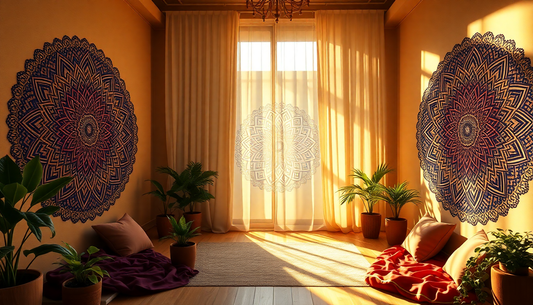
Your meditation space is perhaps the most important area to infuse with mandala designs. This is where you deepen your spiritual practice and connect with your inner self. A well-designed meditation space with thoughtfully chosen mandalas can significantly enhance your practice.
Consider creating a dedicated meditation corner or room in your home. Paint one wall with a soft, neutral color that promotes calm, such as pale blue, soft green, or warm beige. Hang a large, intricate mandala as the focal point of this wall. Choose a mandala that resonates with you spiritually, perhaps one in colors that promote the type of meditation you practice.
Complement your main mandala with smaller mandalas placed on shelves or side tables. You might include a mandala coloring book or printed mandalas that you can use during your meditation practice. Some people find that gazing at a mandala during meditation helps focus the mind and deepen their practice.
Add other elements that support meditation, such as cushions, candles, incense, and plants. The combination of mandala designs with these other elements creates a cohesive, spiritually supportive environment that invites deep practice and inner peace.
Bedroom Sanctuary with Mandala Accents
Your bedroom should be a sanctuary of peace and rest. Incorporating mandala designs here can help create an environment that promotes restful sleep, peaceful dreams, and spiritual renewal.
Consider hanging a mandala above your bed as a focal point. Choose one in calming colors such as blue, purple, or soft green. This placement allows you to see the mandala as you're falling asleep and upon waking, creating a gentle spiritual presence in your most intimate space.
You might also incorporate mandalas through bedding, wall art, or decorative pillows. A mandala-patterned duvet cover or throw blanket can add visual interest while infusing your space with spiritual energy. Mandala wall decals offer an easy, non-permanent way to add these designs to your bedroom walls.
Consider the overall aesthetic of your bedroom when incorporating mandalas. If your bedroom has a minimalist design, a single large mandala might be more appropriate than multiple smaller ones. If your bedroom has a more eclectic or bohemian style, you might incorporate several mandalas in different sizes and colors.
Living Room Elegance with Mandala Art
Your living room is often the heart of your home, a space where you spend time with family and guests. Incorporating mandalas here can create an atmosphere of peace and spiritual awareness that benefits everyone who enters.
A large mandala tapestry can serve as a stunning focal point in your living room. Hang it above your sofa or on a prominent wall where it will draw attention and create visual interest. Choose colors that complement your existing décor while also supporting the spiritual atmosphere you want to create.
You might also incorporate mandalas through framed artwork, throw pillows, or decorative objects. A mandala-patterned area rug can anchor your seating area while adding spiritual energy to the space. Mandala wall art in a gallery wall arrangement can create a sophisticated, spiritually-infused display.
Consider how the mandalas you choose will interact with the natural light in your living room. Mandalas with translucent elements or those hung near windows can create beautiful light effects as the sun moves throughout the day, adding an extra dimension of beauty and spiritual presence to your space.
Home Office Inspiration and Focus
Your home office should be a space that supports focus, creativity, and productivity. Mandalas can help create an environment that enhances these qualities while maintaining a professional appearance.
Choose mandalas in colors that promote mental clarity and focus, such as yellow, orange, or blue. A mandala placed on the wall behind your desk can serve as a visual anchor that helps you stay centered and focused during your work. Smaller mandalas on your desk or shelves can provide gentle reminders to pause, breathe, and reconnect with your intention throughout the day.
Consider incorporating mandalas that specifically support creativity if your work involves creative thinking. Orange and yellow mandalas are particularly effective for this purpose. You might also choose mandalas that represent growth and expansion if you're working toward professional goals.
The key is to balance the spiritual elements with a professional aesthetic. Choose mandalas and display methods that feel appropriate for your work environment while still infusing your space with the spiritual energy and focus that mandalas provide.
Mandala Design Styles and Aesthetics
Traditional and Authentic Mandala Designs
Traditional mandalas follow specific geometric principles and often incorporate sacred symbols and patterns. These designs have been used for centuries in spiritual and religious contexts and carry the weight of ancient wisdom and practice.
If you're drawn to traditional mandalas, look for designs that incorporate authentic elements from Hindu, Buddhist, or other spiritual traditions. These mandalas often feature intricate geometric patterns, sacred symbols, and meaningful color combinations. Displaying traditional mandalas in your home honors these ancient practices and invites their spiritual power into your space.
Traditional mandalas often require careful study to fully appreciate their complexity and meaning. Taking time to understand the symbolism within a traditional mandala you've chosen for your space can deepen your connection to it and enhance its spiritual impact.
Modern and Contemporary Mandala Art
Contemporary mandala designs take the fundamental principles of traditional mandalas and reinterpret them through a modern lens. These designs might incorporate abstract elements, unusual color combinations, or innovative geometric patterns while maintaining the essential spiritual properties of mandalas.
Modern mandalas offer flexibility and personal expression. They allow you to find designs that resonate with your individual aesthetic while still providing the spiritual benefits of mandala art. Contemporary mandalas might feature watercolor effects, mixed media elements, or digital art techniques.
The beauty of modern mandala designs is that they make mandala art accessible to people with diverse aesthetic preferences. Whether your home décor style is minimalist, bohemian, eclectic, or contemporary, you can find modern mandala designs that complement your existing aesthetic while infusing your space with spiritual energy.
Mandala Fusion Styles
Some of the most interesting mandala designs today blend traditional mandala principles with other artistic styles and cultural influences. These fusion designs might combine mandalas with nature elements, incorporate mandalas into abstract art, or blend mandala geometry with other cultural artistic traditions.
Mandala fusion styles offer a way to honor the spiritual roots of mandalas while creating something uniquely personal and contemporary. These designs can be particularly effective in homes with eclectic décor styles or for people who want to create a space that reflects their individual spiritual journey and artistic preferences.
Materials and Display Methods for Mandala Art
Canvas and Framed Prints
Canvas prints and framed artwork are classic ways to display mandala designs. Canvas prints offer a modern, gallery-like aesthetic and can be quite striking as focal points in a room. Framed prints allow you to protect your mandala art while creating a finished, polished look.
When choosing between canvas and framed prints, consider the overall aesthetic of your space. Canvas prints work well in contemporary or bohemian settings, while framed prints might be more appropriate for traditional or eclectic décor. Both options allow you to display high-quality mandala artwork that will last for years.
Tapestries and Wall Hangings
Mandala tapestries are a popular and versatile way to incorporate mandala designs into your space. These fabric hangings can cover large wall areas and create a dramatic focal point. Tapestries are particularly popular in bohemian and eclectic décor styles.
The advantage of tapestries is their flexibility. You can easily change them if you want to refresh your space or if your spiritual needs shift. Tapestries also add texture and warmth to a room, creating a cozy, inviting atmosphere. Many mandala tapestries are made from natural fabrics such as cotton or linen, adding an organic element to your space.
Wall Decals and Removable Stickers
For those who want to incorporate mandalas without making permanent changes to their walls, mandala wall decals offer an excellent solution. These removable stickers come in various sizes and designs and can be easily applied and removed without damaging walls.
Wall decals are particularly useful if you're renting your home or if you like to change your décor frequently. They're also a great option for experimenting with mandala designs before committing to larger, more permanent installations. Many wall decals are available in metallic or glow-in-the-dark finishes, adding extra visual interest to your space.
Mandala Rugs and Floor Coverings
Mandala designs on rugs and floor coverings can anchor a room and create a sense of grounding and stability. A mandala rug can define a seating area, add warmth and texture to a space, and serve as a visual focal point.
When choosing a mandala rug, consider the size of your space and how the rug will interact with your furniture arrangement. A large mandala rug can make a bold statement, while a smaller rug can add a subtle spiritual touch to a corner of your room. Choose colors that complement your existing décor while supporting your spiritual intentions.
Decorative Objects and Sculptures
Beyond wall art and tapestries, mandalas can be incorporated into your space through decorative objects such as sculptures, bowls, plates, and other home décor items. These three-dimensional mandala designs add depth and visual interest to shelves, tables, and other surfaces.
Mandala sculptures and objects can serve as conversation pieces while infusing your space with spiritual energy. They're particularly effective in creating a cohesive mandala-inspired aesthetic throughout your home when used in combination with wall art and other mandala elements.
Creating a Cohesive Mandala-Inspired Aesthetic
Color Palettes and Coordination
Creating a cohesive aesthetic with mandalas involves thoughtful color coordination. Rather than randomly placing mandalas throughout your home, consider developing a color palette that ties your mandala selections together while complementing your existing décor.
You might choose a primary color that appears in several of your mandalas, creating visual continuity throughout your space. Complementary colors can be used in different rooms to create variety while maintaining overall cohesion. Neutral background colors allow your mandalas to stand out while creating a sophisticated, balanced aesthetic.
Balancing Mandala Elements with Other Décor
While mandalas are beautiful and spiritually powerful, they should be balanced with other décor elements to create a harmonious space. Too many mandalas can feel overwhelming, while too few might not create the spiritual atmosphere you're seeking.
Consider the principle of balance when incorporating mandalas. If you have a large mandala as a focal point in one room, you might use smaller mandalas or mandala-inspired elements in other areas. Mix mandala art with other spiritual or nature-inspired décor elements such as plants, crystals, or artwork that complements your mandala selections.
Creating Visual Flow and Movement
The placement of mandalas throughout your home should create a sense of visual flow and movement. Rather than placing mandalas randomly, consider how they guide the eye through your space and create a sense of intentional design.
Mandalas can be used to draw attention to important areas of your home or to create visual pathways that guide movement through your space. A mandala at the end of a hallway can serve as a focal point that draws you forward. Mandalas placed at different heights create visual interest and encourage the eye to move throughout the room.
The Spiritual Practice of Mandala Meditation
How to Use Mandalas for Meditation
One of the most powerful ways to benefit from mandala designs is to use them as focal points for meditation. Mandala meditation, also known as yantra meditation, is an ancient practice that uses the visual focus of a mandala to deepen meditation and spiritual awareness.
To practice mandala meditation, find a comfortable seated position in front of your mandala. You might sit on a cushion on the floor or in a chair, whatever allows you to be comfortable and alert. Gaze softly at the center of the mandala, allowing your eyes to take in the entire design without forcing focus.
As you gaze at the mandala, allow your mind to settle. Don't try to think about or analyze the mandala; simply observe it. If your mind wanders, gently bring your attention back to the mandala. You